リニア大深度トンネル上で隆起、現場を掘削して工事との因果関係調査
Info based on
https://xtech.nikkei.com/atcl/nxt/mag/n ... 121100062/ Accessed 2025-12-22
.

- 2025-12-18_NIkkei-01
. Source:
https://cdn-xtech.nikkei.com/atcl/nxt/m ... 2/8_02.jpg Accessed 2025-12-22
A road-surface heave occurred near a deep underground tunneling site in Shinagawa Ward, Tokyo, where construction is underway for the Chuo Shinkansen (Linear/Maglev). JR Tokai began an on-site excavation investigation to determine whether the tunneling work caused the heave and suspended tunneling operations after the issue was discovered.
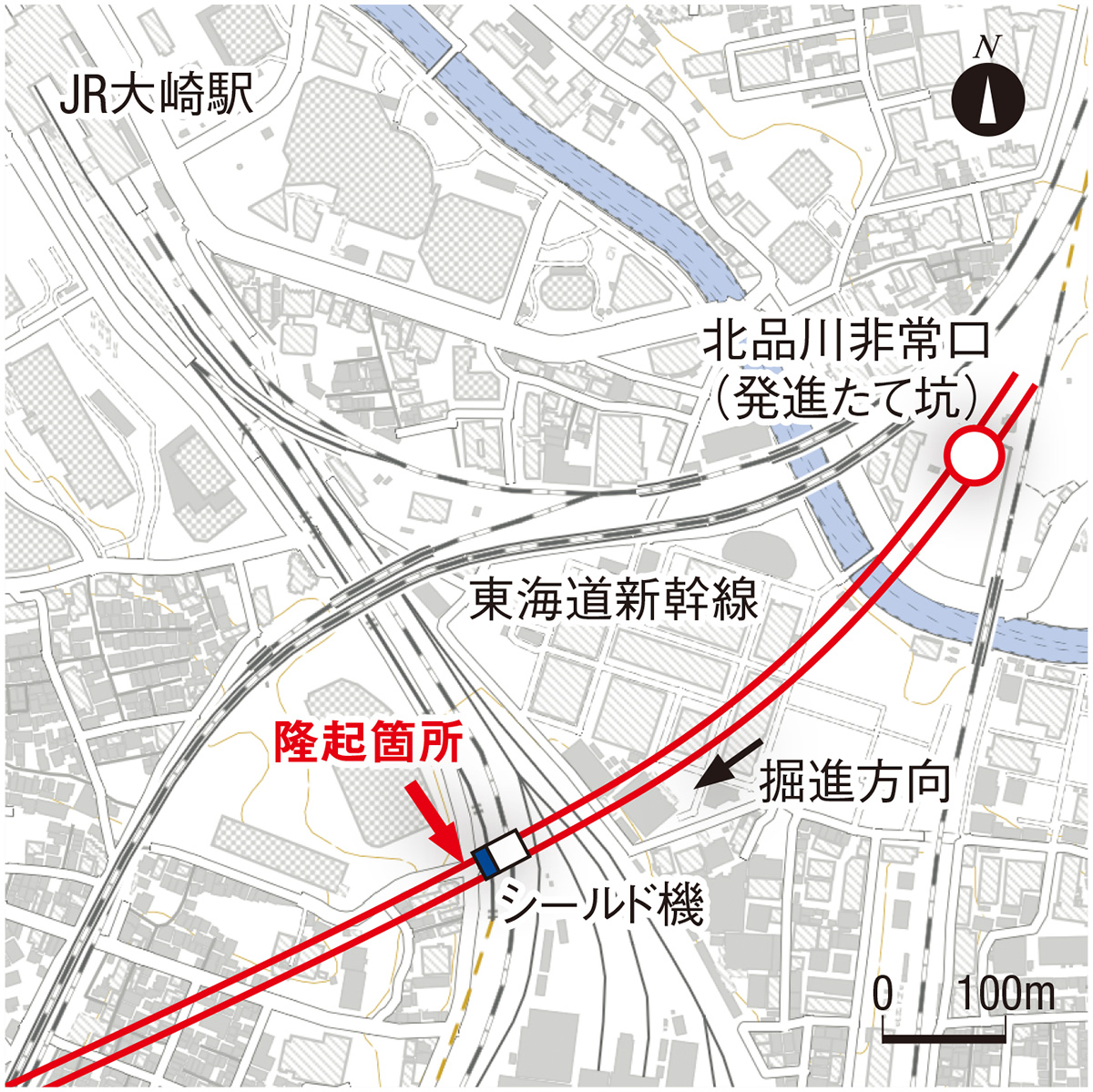
JR Tokai said Shinagawa Ward reported a “step in the roadway” at about 8:30 a.m. on October 28, 2025. Company staff confirmed a height difference of up to 13 cm between the roadway and the sidewalk on a ward road located almost directly above the excavation line. The work in this area is being carried out by a joint venture of Kumagai Gumi, Daiho Corporation, and Tokura Construction on the Kita-Shinagawa section of the “First Metropolitan Area Tunnel.”
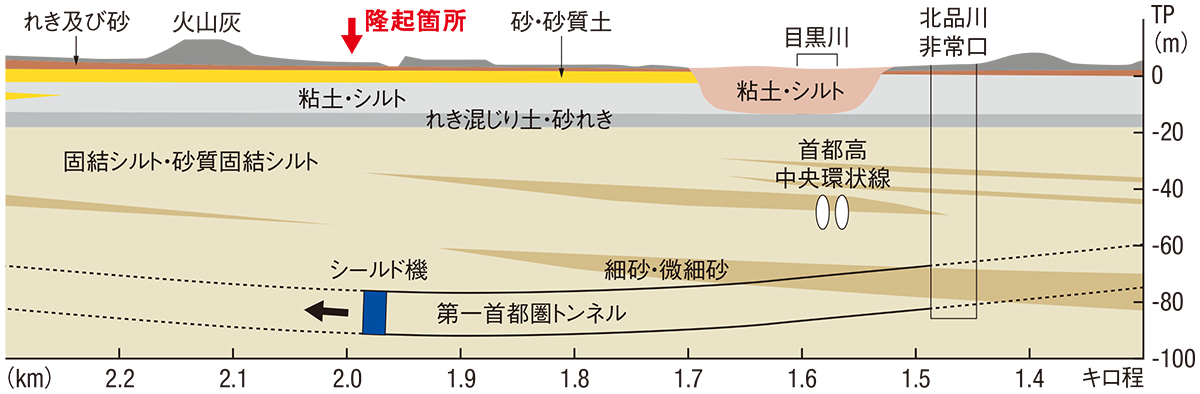
A mud-pressure shield machine with an outer diameter of about 14 m launched in October 2021 from the vertical shaft for the “Kita-Shinagawa emergency exit.” The machine has advanced about 500 m and is currently stopped roughly 5 m short of the heave location. The overburden at this point is about 80 m. While the project does not set a formal surface-displacement management limit, it uses 1/1000 radian as a guideline threshold; no measured displacement exceeded that guideline through the day before the heave was identified.
In response, Shinagawa Ward formally requested that JR Tokai quickly identify the cause and not resume shield advance until the cause is known. The ward cited residents’ concerns, referencing two previous tunneling suspensions due to shield-machine issues and reports of bubble formation in the Meguro River believed to be related to the construction.

- 2025-12-18_NIkkei-02
Normally, air underground is blocked by clay layers, but it can rise through boreholes and other openings. (Source: Created by Nikkei Cross Tech based on JR Central materials)
Source:
https://cdn-xtech.nikkei.com/atcl/nxt/m ... 2/8_03.jpg Accessed 2025-12-22
The first shield-machine problem in this section was identified during “survey advance” work intended to confirm construction impacts on the surrounding area. After reduced advance efficiency was observed, the machine was stopped in March 2022 and part of the additive injection system was found to be faulty. After a suspension of more than a year, tunneling resumed in May 2023. Soon after, segment alignment difficulties occurred; the machine was stopped again in July 2023, and an indentation up to about 7 cm deep was found in the steel outer shell. This second suspension lasted about nine months, with tunneling resuming in April 2024.
Following the October 2025 heave, JR Tokai started an excavation survey near the site on November 20, 2025. The company is restricting lanes during weekday daytime hours over a roughly 40 m stretch and excavating to depths of about 0.5–3 m to check ground conditions and the status of utilities and other lifeline infrastructure.
.

- 2025-12-18_NIkkei-03
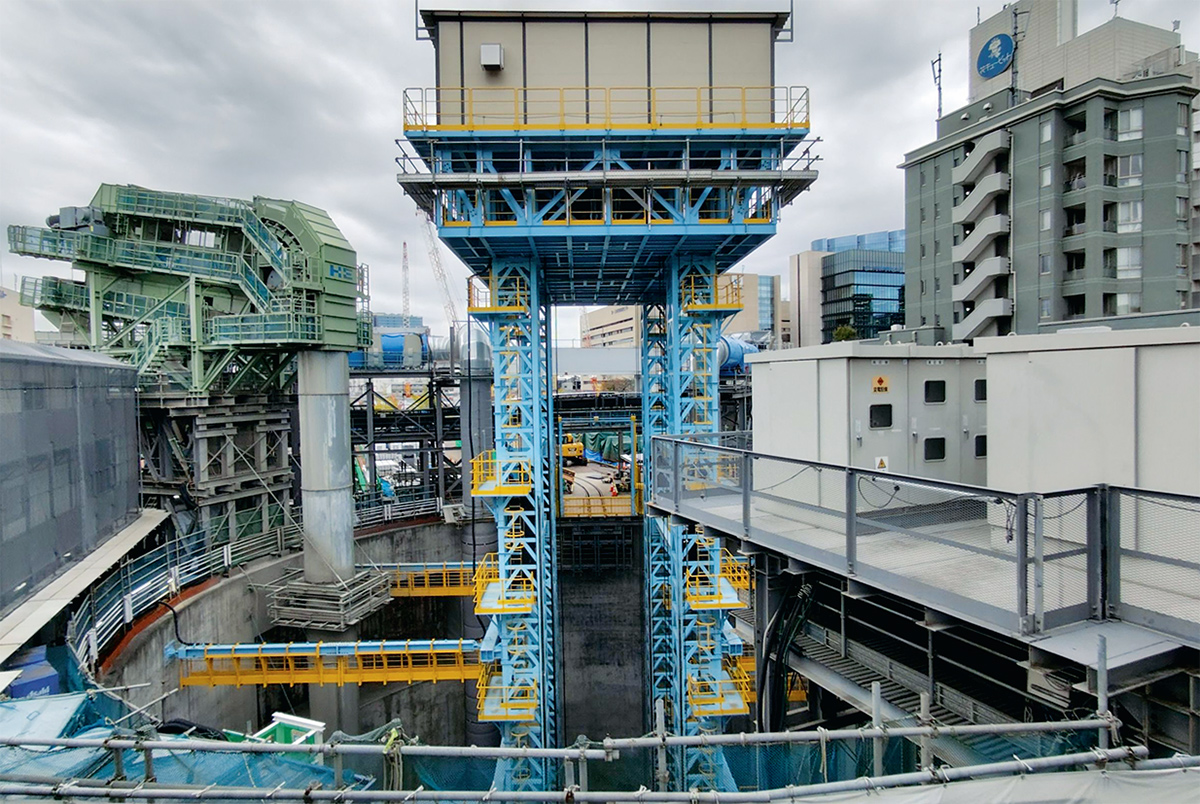
. North Shinagawa Emergency Exit of the Launch Shaft (Photo: Nikkei Cross Tech)
Source:
https://cdn-xtech.nikkei.com/atcl/nxt/m ... /8_04p.jpg Accessed 2025-12-22
A geotechnical engineering specialist, Associate Professor Shoji Kamao of Nihon University, suggested the heave may be related to foaming agent used during tunnel excavation. In mud-pressure shield tunneling, a cream-like foaming agent is injected to increase soil flowability; he noted that bubbles and/or compressed air could migrate upward, accumulate near the surface, and then rapidly lift pavement. JR Tokai reported that radar surveys after the event found no voids down to 1.5 m, but Kamao cautioned that compressed air could still accumulate in gaps within sand layers or road base materials even without a detectable void.
Info based on
https://xtech.nikkei.com/atcl/nxt/mag/n ... 121100062/ Accessed 2025-12-22