Incheon Airport's 450 Billion Won Maglev Rides Empty
Next-Gen Transport Turned 'White Elephant' with Daily Ridership Below 1,000
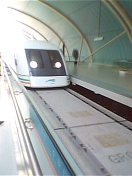
South Korea’s Incheon Airport maglev train, launched in 2016, is widely seen as a costly “white elephant” despite massive public investment. The central government, Incheon City, and the Incheon International Airport Corporation spent about 450 billion KRW to build the line, which was promoted as a “next-generation transportation method” due to its low noise and vibration from magnetic levitation.
The project was envisioned as a national pilot, with ambitions to expand maglev systems across Korea and export the technology overseas. At the time, the government claimed it would “generate an economic effect of over 3 trillion Korean won,” while Incheon Airport marketed it as the “world’s second maglev train following Nagoya, Japan.” To boost usage, fares were initially free.
In reality, ridership fell far short of expectations. Planners had projected 30,000–40,000 daily passengers, assuming nearby hotels, resorts, and a water park would be developed. Those projects were later canceled, leaving areas like “Water Park Station” surrounded by empty fields with no construction plans. Major attractions are also poorly connected—Wolmari Beach, a key tourist site on Yeongjong Island, is 7 km away from the terminal station (Yongyu Station).
As a result, even at its peak in 2019, the line averaged only 4,000 daily riders, and today averages around 1,000 users per day, with trains often running nearly empty. Service was suspended for three years during COVID-19 due to low demand and only resumed in October last year, with little improvement.
Looking ahead, the outlook is grim. A Ministry of Land, Infrastructure and Transport study estimates that maintaining the maglev will cost over 40 billion KRW over the next 30 years. Experts warn that “excessive optimism about the new technology has increased the financial burden.” Kim Kyeong-taek of the Korea Transport Institute noted that “the sunk costs are too high to demolish the maglev train, and aside from local governments activating nearby tourist resources, there is no other viable solution.”
Info based on: https://www.chosun.com/english/national ... LNQNYVV7I/ Accessed 2026-01-10
[KR] Incheon Airport's 450 Billion Won Maglev Rides Empty
-
latestnews
- Posts: 550
- Joined: 1. Oct 2021, 13:44
-
latestnews
- Posts: 550
- Joined: 1. Oct 2021, 13:44
[KR] South Korea’s Ecobee Maglev Is Running Again—But Barely
It does not run on Mondays ...
South Korea’s Incheon Airport Maglev (Ecobee) is back in service, but only at a minimal level. It does not run on Mondays, and on operating days service starts at 10:15 a.m. and ends with the last departure from the airport at 4:40 p.m., with trains running about every 35 minutes. That effectively reduces the line to a very limited, low-frequency shuttle.
The system had previously operated with multiple trains, but service has been cut so sharply that it is now far less useful for airport hotel guests and airport workers. Even though rides are still free, the current schedule makes the line unattractive for regular use.
Ecobee had once been promoted as a major example of practical urban maglev deployment. The line was built as a double-track, fully automated airport transit system with several stations, but broader expansion plans did not materialize. The planned ring line around the Incheon Airport area was abandoned, the system does not reach Terminal 2, and South Korea is no longer actively pursuing Hyundai Rotem’s maglev program.
Info based on: https://www.notebookcheck.net/South-Kor ... 503.0.html by Andreas Sebayang, Published 04/27/2026. Accessed 2026-04-30
South Korea’s Incheon Airport Maglev (Ecobee) is back in service, but only at a minimal level. It does not run on Mondays, and on operating days service starts at 10:15 a.m. and ends with the last departure from the airport at 4:40 p.m., with trains running about every 35 minutes. That effectively reduces the line to a very limited, low-frequency shuttle.
The system had previously operated with multiple trains, but service has been cut so sharply that it is now far less useful for airport hotel guests and airport workers. Even though rides are still free, the current schedule makes the line unattractive for regular use.
Ecobee had once been promoted as a major example of practical urban maglev deployment. The line was built as a double-track, fully automated airport transit system with several stations, but broader expansion plans did not materialize. The planned ring line around the Incheon Airport area was abandoned, the system does not reach Terminal 2, and South Korea is no longer actively pursuing Hyundai Rotem’s maglev program.
Info based on: https://www.notebookcheck.net/South-Kor ... 503.0.html by Andreas Sebayang, Published 04/27/2026. Accessed 2026-04-30
-
latestnews
- Posts: 550
- Joined: 1. Oct 2021, 13:44
[KR] Incheon Airport's 450 Billion Won Maglev Rides Empty
- 2026-04-26_Sebayang_01